
Why Reno’s Downtown “Activation” Program Keeps Failing
Reno officials are once again celebrating “public space activation” — a familiar phrase that has become City Hall shorthand for festivals, light installations, DJs, and pop-up events.

Reno officials are once again celebrating “public space activation” — a familiar phrase that has become City Hall shorthand for festivals, light installations, DJs, and pop-up events scattered across downtown plazas.
According to a recent article in This Is Reno, the city plans to expand its Downtown Activation Pilot, a program overseen by the Reno Redevelopment Agency, with reimbursement grants of up to $20,000 per event for third-party producers.
The stated goals are to increase foot traffic, create “vibrancy,” and draw attention to vacant storefronts.
The problem is not that these events are bad. The problem is that they are being used to avoid confronting the real causes of downtown failure.
I have lived in Reno since June 2019. I walk downtown. I bike it. I shop it. I talk to business owners. And I’ve watched conditions steadily worsen while the city continues to engage in performative actions, like placemaking and activation.
Link to the This is Reno article: “Reno looks to expand downtown activation program.”
Activation Is Not Revitalization
Placemaking theory assumes that if you bring people to a place, economic activity will follow. That assumption collapses when the underlying market is broken.
Downtown Reno’s problem is not only a lack of foot traffic. It is:
Rents that do not reflect economic reality
Functionally uninhabitable buildings
Landlords who will not negotiate
Long-term vacancies with no consequences
A regulatory environment that punishes small operators
The Downtown Reno Partnership reports 19 vacant retail spaces, most of which are controlled by a small number of owners. Some representatives are “unresponsive.” Many buildings are in “pretty rough shape.” Interest from potential tenants is “light.”
That is not a marketing problem. That is a structural one. You cannot program your way around bad economics.
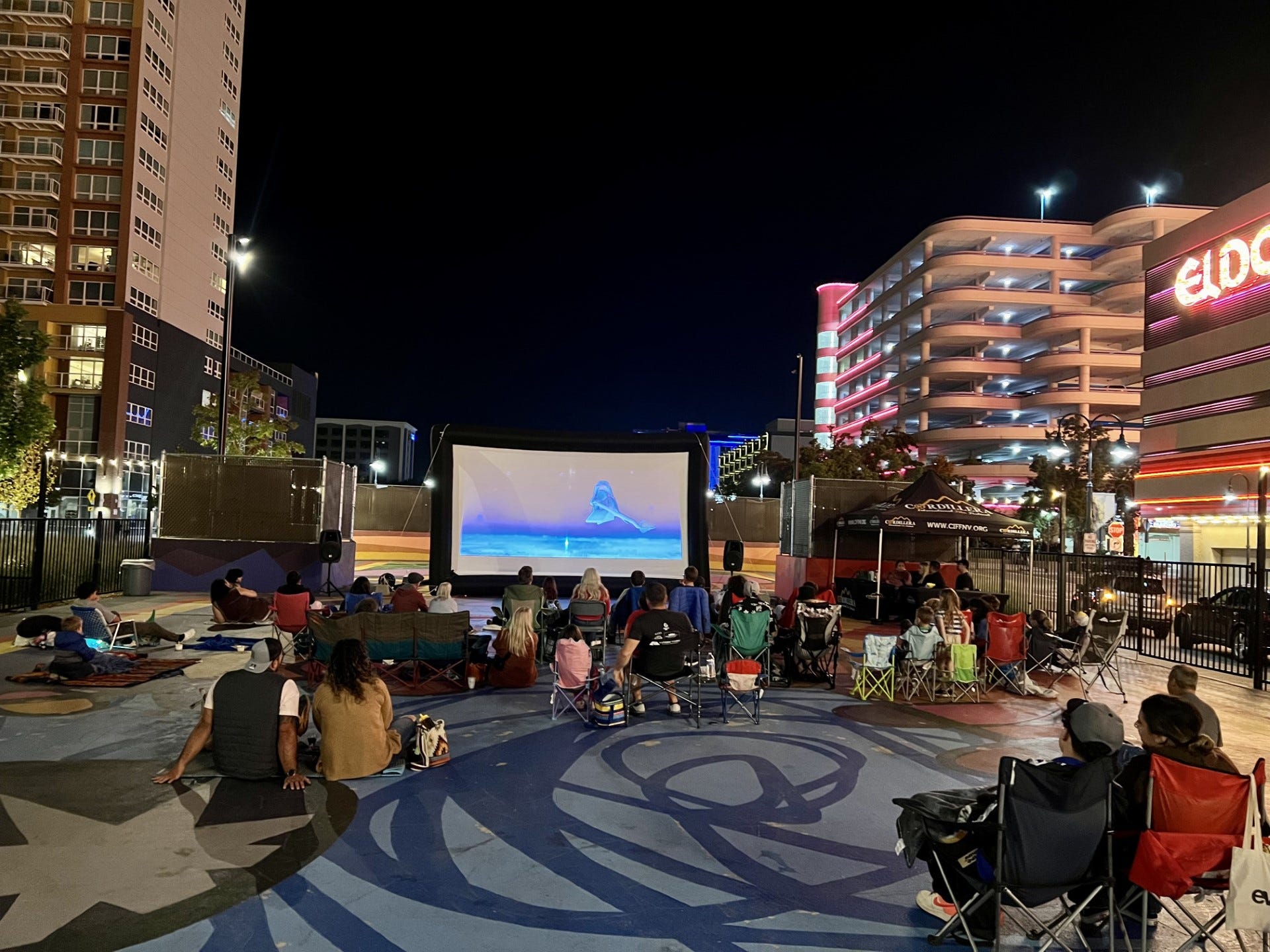
Reno calls this “transforming vacant and underutilized spaces into vibrant community gathering places.”
Who Benefits From This Program?
The activation program primarily benefits:
Event producers who receive grants
Consultants and placemaking professionals
City departments that get to report “metrics.”
Media outlets that can photograph crowds
It does not meaningfully benefit:
Prospective small business owners
Long-term downtown residents
Taxpayers who want permanent solutions
The empty storefronts themselves
A DJ night does not lower rent.
A light festival does not fix a roof.
A pop-up market does not make a lease bankable.
Yet the city keeps pretending that visibility is the same thing as viability.

Vacant Storefronts Are Not a Visibility Problem
Reno officials repeatedly say these events help “draw attention” to vacant retail spaces.
Attention is not the issue.
Every vacant storefront downtown is already evident — because it has been empty for years.
What potential tenants see when they walk downtown is not opportunity.
They see:
boarded windows
outdated utilities
ADA noncompliance
uncertain permitting timelines
deferred maintenance
landlords demanding exorbitant rents
No amount of foot traffic fixes that math.

The City Refuses to Use Its Leverage
What makes this especially frustrating is that the city has tools—and refuses to use them.
There is no severe vacancy penalty.
No escalating fees for long-term blight.
No mandatory remediation timelines.
No rent transparency requirements.
No public accountability for chronic non-performance.
Instead, the city politely asks landlords to participate, hopes they respond, and then spends public money to animate the sidewalks in front of their decaying properties.
That is not redevelopment. It is subsidized by neglect.

Temporary Activation Has Become Permanent Policy Failure
The most revealing aspect of the program is that it is always described as a “pilot,” even years in.
Pilots are supposed to test something and either evolve or end. In Reno, pilots repeat.
Each year brings:
new branding
new metrics
new enthusiasm
the same vacant buildings
Meanwhile, downtown residents live with the consequences:
noise without stability
crowds without commerce
disruption without repair
Activation without permanence is not revitalization — it is churn.
What a Serious Downtown Policy Would Look Like
If the city were serious about downtown recovery, the conversation would include:
enforced timelines for bringing vacant properties up to code
Penalties for speculative long-term vacancy
mediation or incentive programs tied to actual rent reduction
public disclosure of vacancy duration by property
targeted assistance to tenants, not just event producers
Instead, we get light festivals and optimism.
Conclusion: You Can’t Decorate Around Dysfunction
Downtown Reno does not lack creativity or community spirit. It suffers from a lack of political will.
Placemaking has become a way to appear busy while avoiding conflict—especially with powerful property owners. Until that changes, Reno will continue to host events in front of empty buildings and call it progress.
You cannot activate a place that is structurally unable to function. And no amount of lighting will change that.
You can support local journalism. Click to donate: Mike’s Reno Report.

I wouldn’t say downtown’s pilot activation program failed, it brought over 90,000 people downtown in a single event season. And that doesn’t include legacy events like Artown or the Italian Festival etc. It helps retain downtown Reno residents, many of whom live downtown for very reason of being able to walk to events downtown. If you do some research on other redevelopment agencies across the country, placemaking is very much a portion of what they do.
It’s also important to know that the city council (When Jardon was on the council) tried twice to have the legislature pass a vacant land tax and vacant building tax only for it to be defeated by realtor lobbyists.
Most vacant downtown buildings ARE up to code, and the ones that aren’t are fined repeatedly, and they either just pay or ignore the fines. If they don’t pay the fines the City can put a lien on their property, but if they never intend on selling it, the liens are useless, and fall off after three years anyway.
The city can’t dictate what a downtown property owner does with their property. It can remain vacant for a decade and the city council is powerless to do anything except fine them if it isn’t up to code. The reno City attorney prevents council members from publicly calling out certain property owners about the state of their properties, which is why I am doing it on Downtownmakeover.
The same goes for vacant lots downtown.
There are some ideas circulating to increase those fines and change the definition of blight, but it still won’t change anything or force downtown property owners to split up the large spaces that no one wants to lease.
Also the whole point of expanding it is to allow MidTown and East 4th St to be able to gain access to assistance with events, which has nothing to do with downtown, which is why it’s called the DISTRICT pilot. Also did you go to any of the events? Because local businesses like Sierra Taphouse did indeed tell the city the events helped increase business for them. That was reported in our last RAAB meeting. Also if you went to Western Lights Festival then you know nearly every downtown restaurant and bar was packed with people.
PS. Regetably, most of Reno's old buildings downtown probably need to be leveled.